Over 1,000 shooters told us what they wish they knew — here's everything
What Do You Wish You Knew Before Buying Your First AR-15?
Your Rifle Is Fine. Probably.
We ran a one-day survey that over 1,000 shooters participated in, asking one simple question: what do you wish you knew before buying your first AR-15? The responses ranged from brutally honest to genuinely funny. Here's what they said — and what it means for you.
The single most consistent theme? Most people overthink the rifle and underthink everything else.
A $700 Aero Precision or Smith & Wesson M&P Sport II is a perfectly good first AR-15. It will go bang every time you pull the trigger, hold reasonable accuracy, and last tens of thousands of rounds with basic maintenance. You do not need to spend $2,000 on your first rifle, and you should not let the internet shame you into thinking otherwise.
The gun itself is actually the least important part of the equation. Ammo, training, and a handful of key accessories will do more for your shooting ability than any amount of money poured into the rifle. A $700 rifle with 2,000 rounds of trigger time behind it will outshoot a $2,000 safe queen every single day.
So relax. Your rifle is probably fine. Now let's talk about what actually matters.
"Black Rifle Disease" Is Real
The most common piece of advice in our entire survey — by a wide margin — was about the upgrade loop. One shooter summed it up perfectly: you cheap out on something, it nags at you until you buy the thing you actually wanted, and then you have a spare part sitting around. That spare part doesn't sit around for long. It becomes the seed of another rifle. And then another.
Multiple commenters confirmed the pattern. One wrote that the amount of money he spent trying to avoid spending money was, in his words, insane. Another put it simply: extra parts equal more guns. They multiply like rabbits.
The unanimous agreement from experienced owners? There can never be just one. This is not a warning you will heed — nobody does — but at least you'll recognize it when it happens.
The 1.5x Budget Rule: One commenter who runs an ammo company shared this gem: if you're building your first AR, it's going to cost 1.5 times more than you budgeted for. Plan accordingly. Between tools, shipping, that optic you didn't budget for, and the inevitable "well, while I'm at it" parts, the overrun is practically guaranteed.
The Great Debate: Cheap First or Quality First?
This is THE most debated topic in the AR community. It was the single most discussed theme in our survey — the community is genuinely split, and both sides make compelling arguments.
Camp A: Buy Quality First
The most popular response argued that buying cheap means you'll eventually buy the thing you actually wanted anyway, spending more total. Another shooter echoed this: buying quality stuff the first time ended up being cheaper in the long run.
The "buy once cry once" crowd has a point: if you already know you want a BCM or a Daniel Defense, buying a PSA first just delays the inevitable and costs you more overall.
Camp B: Start Cheap, Learn What You Like
On the other side, another popular response made the case that a $500 gun and $500 in ammo and training would serve you much better than a $1,000 gun with no training budget. This is the practical argument: you don't know what you want yet, so spending $2,000 on your first rifle means you're spending $2,000 on guesses.
The original poster's own reply captured the tension perfectly — he said he was torn between the two camps, hearing good arguments on both sides.
Camp C: The Middle Ground
The most practical advice might be the middle path that kept coming up: put a quality upper on a budget lower. A BCM or Aero upper on a PSA lower gets you about 90% of the performance at 60% of the cost. The upper is where the accuracy and reliability live — barrel, bolt carrier group, gas system. The lower is a trigger housing. As long as it's in-spec, it doesn't matter much.
"Buy once cry once" has a catch: It only works when you already know what you want. If you're brand new and haven't shot enough to know whether you prefer a 1-6x LPVO or a red dot, buying a $1,200 optic is just an expensive guess. Budget vs. quality isn't a binary choice — it's a question of timing.
"Sling, Light, Optic" — The Holy Trinity
Before you buy a single accessory — before a foregrip, before a new stock, before a cool handguard — get these three things. This is the advice every experienced shooter gives, and every new shooter ignores for about six months before coming around.
Sling
A sling is a holster for your rifle. Without one, you're carrying your rifle in your hands at all times, which gets old after about four minutes. A good two-point sling — the Magpul MS4, Blue Force Gear Vickers, or Ferro Slingster — costs $35-65 and is arguably the most important accessory you will buy.
It lets you transition to a sidearm, go hands-free to open a door or climb, and keeps the rifle on your body if you trip or stumble. Every military unit, every law enforcement team, every serious competition shooter uses a sling. You should too.
Light
You need to see what you're shooting at. Period. If you can't positively identify a target, you cannot justify sending a round at it. This isn't tactical cosplay — it's basic responsibility, and it applies double if you're considering a home defense role for this rifle.
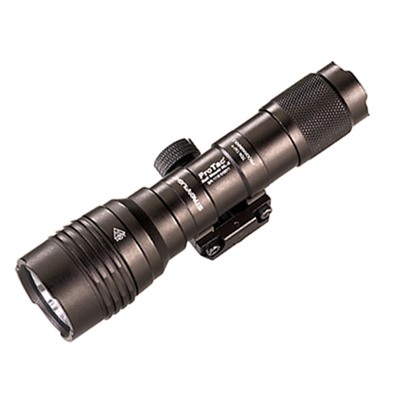
The Streamlight ProTac HL-X is the standard budget recommendation. It throws 1,000 lumens, has a proven track record, and runs on a single CR123A or rechargeable 18650 battery. The SureFire M600DF is the step-up when budget allows.
Optic
Iron sights are fine to learn on, and you should understand how to use them. But a red dot makes you faster and more accurate, period. Both eyes open, dot on target, press the trigger. It's simpler and more intuitive than aligning front and rear sights.
Optics came up as the second most discussed theme in our entire survey. One shooter put it bluntly: spending a lot on a build just to cheap out on optics is, and I'm paraphrasing only slightly, a terrible idea. Another offered a great analogy from the photography world: date the rifle, marry the glass. A quality optic outlasts multiple rifles and moves from gun to gun. The cheap red dot goes in the junk drawer.
The Sig Romeo 5 is the gold standard budget red dot — MOTAC (motion-activated) power, solid battery life, and a track record of holding zero on thousands of rifles. The Holosun HS510C is the step-up with a larger window and solar backup.
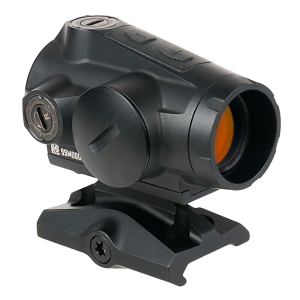

The #1 piece of advice from experienced shooters: Buy a sling before you buy a foregrip, a new trigger, or a cool handguard. You'll use it every single range trip.
Backup Irons — Yes, You Still Want Them
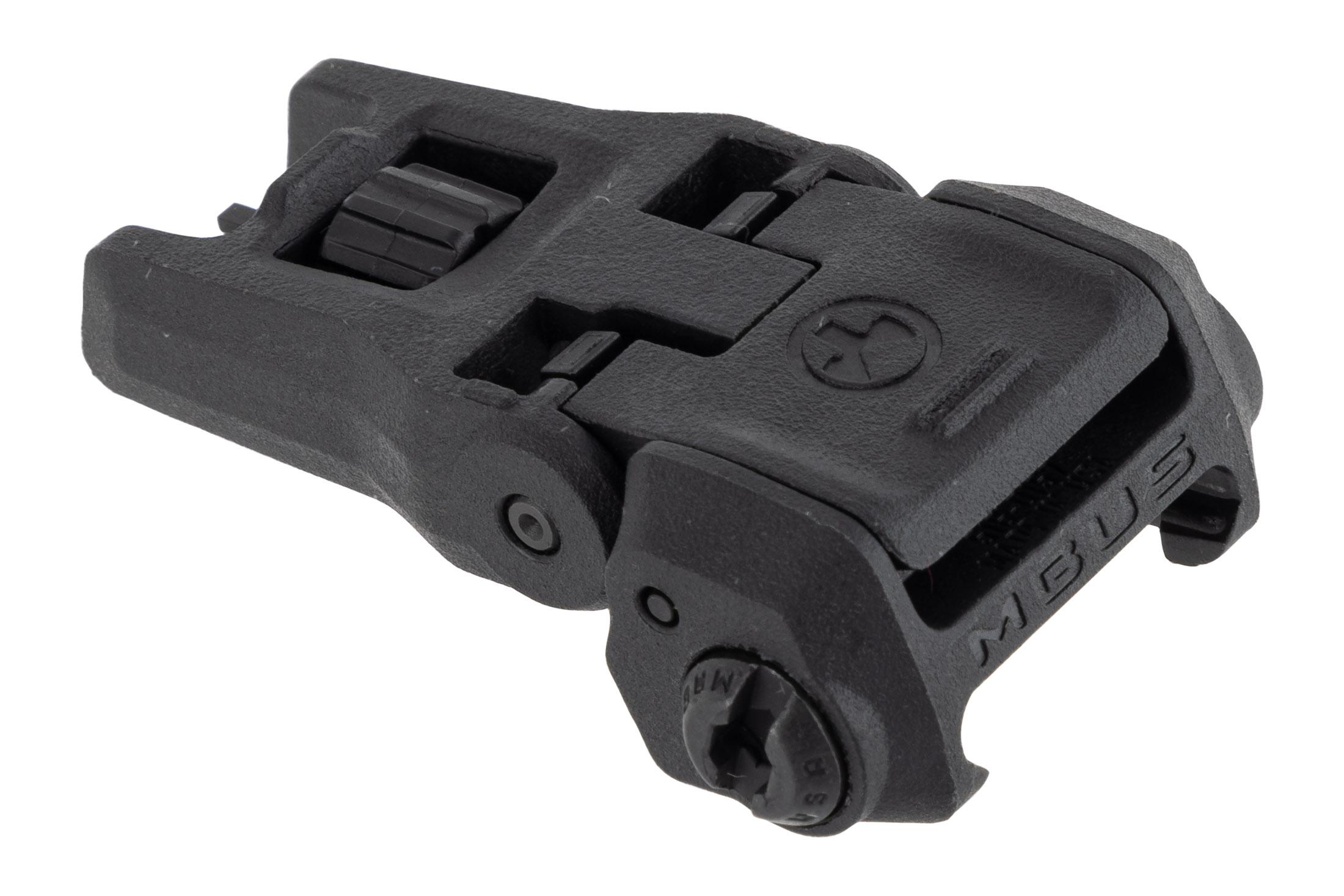
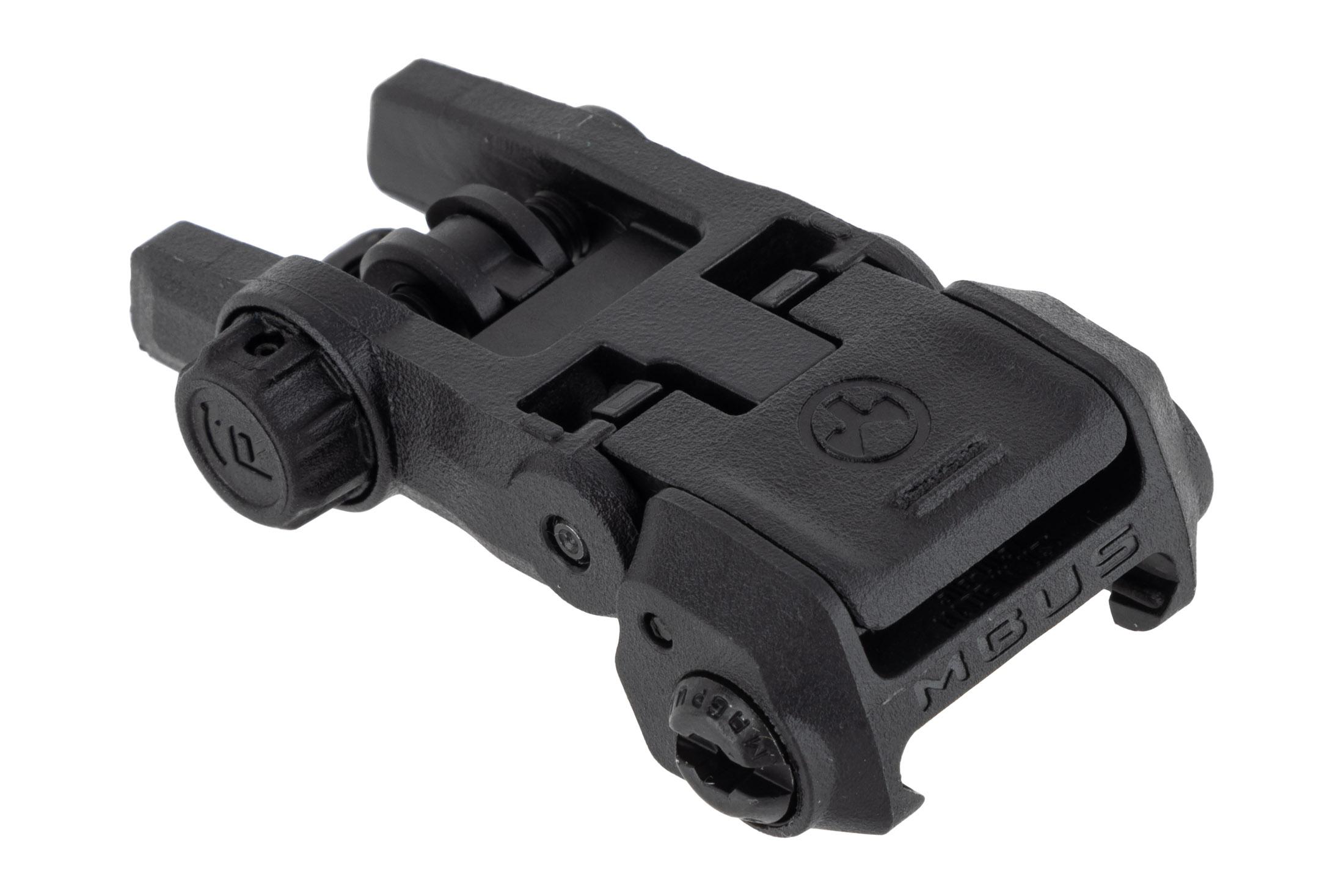
Even with a red dot, throw a set of MBUS on there. Batteries die, electronics fail, and Murphy's Law doesn't care about your range day plans. At roughly $80 for the front and rear set, there's simply no reason not to have them.
The Magpul MBUS Gen 3 sights fold down flat against the rail when not in use, weigh almost nothing, and co-witness through most red dots. They're insurance you'll hopefully never need, but you'll be glad you have them if a battery dies at the worst possible moment.
Ammo Matters More Than Your Rifle
This is the most important section of this guide, and most beginners skip it. In our survey, ammo and training was the most frequently mentioned theme by a wide margin. The community is practically screaming this advice.
A $700 rifle with 2,000 rounds of practice will outshoot a $2,000 rifle with 200 rounds every single time. Your trigger control, sight picture, and recoil management are built through repetitions, not equipment. Budget at least as much for ammo as you do for the rifle in your first year. If you spend $800 on the gun, put $800 aside for ammunition and range time.
Chamber Basics
Your rifle's chamber determines what ammunition it can safely fire:
- 5.56 NATO chamber: Shoots both .223 Rem and 5.56 NATO safely. The chamber is cut with more generous tolerances to handle the higher-pressure 5.56 cartridge.
- .223 Remington chamber: Only shoot .223 Rem through it. 5.56 NATO ammunition generates higher chamber pressure and is not safe in a .223-only chamber.
- .223 Wylde chamber: Shoots both .223 and 5.56, but is optimized for .223 accuracy while maintaining 5.56 reliability. This is the best of both worlds and increasingly common on mid-range and higher rifles.
What to Buy
For range practice, buy bulk brass-cased .223 Rem from Federal, PMC, Fiocchi, or Winchester. Steel-cased ammo (Tula, Wolf) is cheaper and works fine, but some indoor ranges don't allow it and some shooters report slightly less accuracy.
For home defense, use quality 55gr or 62gr soft point or hollow point ammunition designed for defensive use. Federal Fusion MSR, Hornady V-MAX, and Speer Gold Dot are all solid choices.
Don't store your rifle loaded with M855 green tip for home defense. It's designed to penetrate barriers, which means it goes through drywall like paper. Use soft point or hollow point ammunition designed for defensive use.
Gas System Length — Why It Actually Matters
This is the spec nobody explains to new buyers, and it makes a massive difference in how your rifle feels to shoot. Multiple respondents in our survey specifically said they wish they had gone with a mid-length gas system — it was one of the most emphatic pieces of advice in the entire survey.
The gas system taps propellant gas from the barrel through a small hole (the gas port), routes it back through a gas tube, and uses that pressure to cycle the bolt carrier group — ejecting the spent case and loading the next round. Where that gas port sits along the barrel determines the gas system length, and it directly affects recoil impulse, bolt velocity, and parts wear.
- Carbine-length gas (on a 16" barrel): Reliable but snappy. The gas port is close to the chamber, so gas hits the bolt carrier early and hard. This means more felt recoil and faster bolt carrier velocity, which accelerates wear on your buffer, bolt, and extractor.
- Mid-length gas (on a 16" barrel): The sweet spot. The gas port is further down the barrel, giving the bullet more time to pass the port before gas is tapped. This means lower bolt carrier velocity, smoother recoil impulse, and significantly less wear on internal parts. Still completely reliable.
- Rifle-length gas (on 18-20" barrels): The smoothest cycling of all, but only works on longer barrels where the gas port position and dwell time work out correctly.
What this means for you: When shopping for a 16" AR-15, look for mid-length gas. It's the single biggest factor in how smooth the gun feels to shoot, and it costs you nothing extra — you're just buying the right barrel in the first place.
If you only remember one spec, make it this: mid-length gas on a 16" barrel. It's the reason an $800 Aero with a mid-length barrel can feel smoother than a $1,200 rifle with carbine-length gas. Shooter after shooter called this their number one regret.
The Upgrades That Actually Change How You Shoot
Not all upgrades are created equal. Some make you measurably better. Some make the gun more pleasant to use. And some are just cool. Here's how to think about where your money actually goes.
One recurring piece of community wisdom keeps coming up: uppers and lowers don't matter that much as long as they're in-spec. The real money should go into the barrel, bolt carrier group, and trigger. Those are the parts that determine accuracy, reliability, and how the gun feels to shoot. Everything else is a housing.
And here's something nobody warns new buyers about: long, heavy barrels are genuinely long and heavy. It's not an exaggeration. If you haven't held a rifle with a 16-inch government-profile barrel for an extended period, the weight adds up fast. Consider a pencil or lightweight profile if weight matters to you.
Tier 1 — Makes You Shoot Better
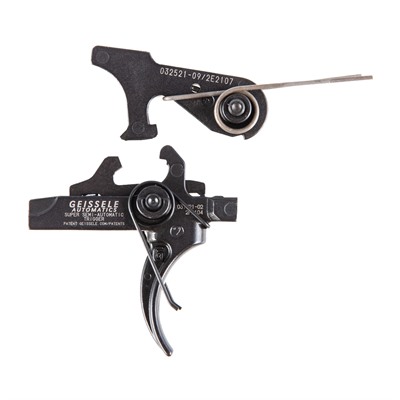
Trigger: This is the single biggest upgrade you can make to any AR-15. A stock mil-spec trigger breaks at 6-8 pounds with grit and creep. A Geissele SSA (Super Semi-Automatic) breaks at a clean 4.5 pounds with a crisp, two-stage pull. The difference is night and day — your groups tighten, your follow-up shots get faster, and you stop fighting the gun.
The LaRue MBT-2S is the budget king at roughly $100 and gives the Geissele a run for its money. Both are excellent choices.
Tier 2 — Makes the Gun More Pleasant
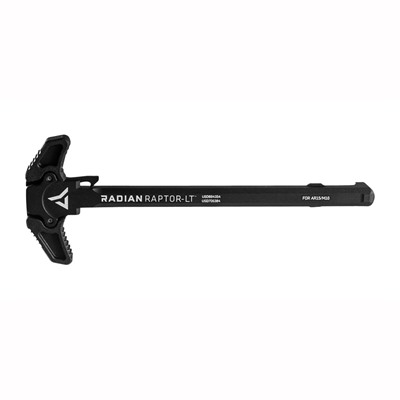
Charging handle: You'll appreciate an ambidextrous charging handle the first time you need to clear a malfunction under stress, or even just the first time you try to charge the rifle with gloves on. The Radian Raptor-LT is the standard recommendation — it's reasonably priced, tough, and works exactly like you'd expect.
Bolt carrier group: Your stock BCG is probably fine, especially if you bought from a reputable manufacturer. But if you're building from parts, a BCM or Toolcraft BCG is a genuine quality upgrade over no-name carriers. Look for properly staked gas key, MPI (magnetic particle inspected) bolt, and chrome-lined carrier.

Tier 3 — Comfort and Preference
Grip: The stock A2 grip that ships on most ARs has a steep angle that a lot of people find uncomfortable. The Magpul MOE K2+ is more vertical, has a rubberized overmold that's comfortable without gloves, and runs about $24. It's one of those upgrades that's cheap enough to just try.
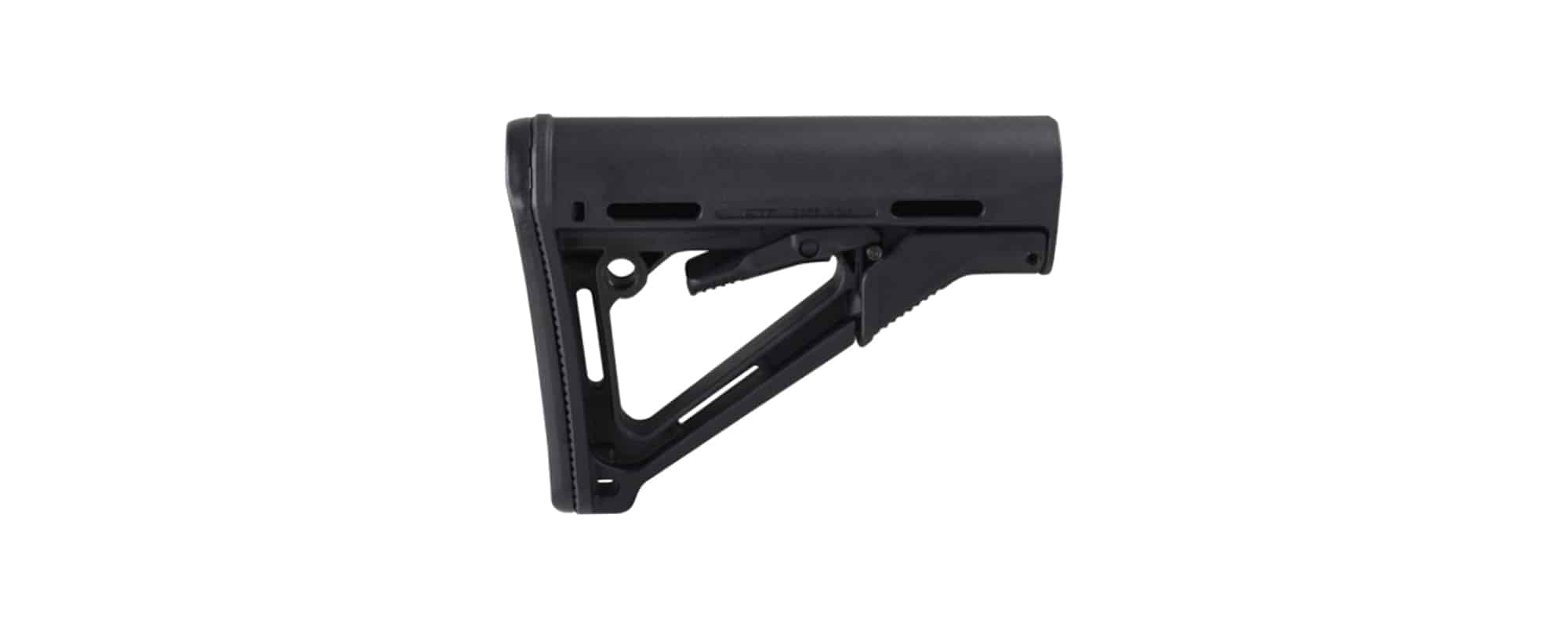
Stock: The Magpul CTR is the workhorse collapsible stock — solid lockup, QD sling points, and reasonable cheek weld. If you're running a magnified optic or just want a wider cheek weld, the B5 SOPMOD adds storage compartments and a noticeably broader stock body.


Magazines — Just Buy PMAGs
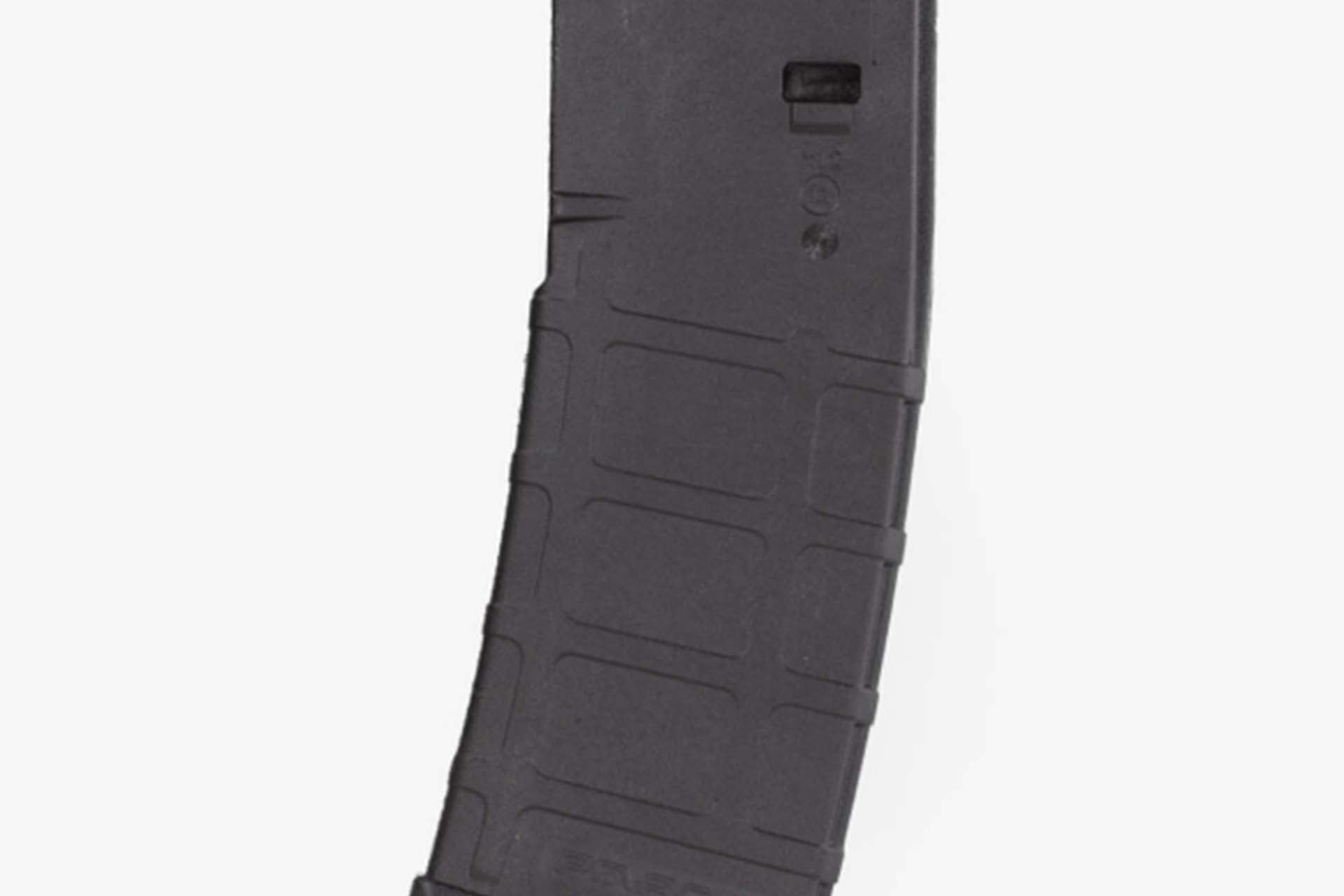
Magpul PMAGs are the standard for a reason. They work, they're cheap, they're everywhere, and they're proven across millions of rifles in military and civilian use. The 30-round PMAG MOE runs about $11. There's no reason to buy anything else unless you have a specific need.
Buy at least 5-7 magazines to start. More is better. You'll want extras for range trips so you're not constantly reloading, and having dedicated magazines for home defense means they're always loaded and ready.
Don't buy ProMag, Hexmag, or ETS for duty or defense use. PMAGs and USGI aluminum mags (from Okay Industries / Surefeed) are the proven choices with decades of track record. Everything else is a gamble you don't need to take.
Buy magazines in bulk when they're on sale. They're the most commonly lost, broken, and banned item in the AR world. Having a stack of PMAGs is never a bad investment.
Common Money Pits to Avoid
Every beginner falls into at least one of these traps. Save yourself the hassle:
| Money Pit | Why It's a Trap | What to Do Instead |
|---|---|---|
| Cheap optics | A $40 red dot will lose zero, fog up, and die when you need it | Save for a Sig Romeo 5 ($110) or Holosun |
| Bipod on a 16" carbine | You're not sniping with a 16" barrel and a red dot | Get a sling instead |
| Flashy colored parts | Red anodized parts don't make you shoot better, and you'll just paint over them anyway | Spend the money on ammo |
| Skeleton grips | They look cool and feel terrible after 100 rounds | Magpul MOE or K2+ ($19-24) |
| Forward grip before a sling | You're solving the wrong problem | Buy. A. Sling. |
| Commercial buffer tube | Slightly different diameter than mil-spec — limits your stock options and resale value | Always get mil-spec buffer tube |
| Punisher skull dust covers | No | Just no |
Build vs. Buy — The Honest Answer
This question comes up constantly, and the right answer depends on where you are in your shooting journey.
Buy complete if: It's your first AR, you don't have armorer's tools, or you want a manufacturer warranty. Companies like Smith & Wesson (M&P Sport II), Ruger (AR-556), Aero Precision, and BCM sell rifles that work out of the box with proper quality control and headspace checks already done.
Build from parts if: It's your second or third AR and you want to learn how the platform works at a mechanical level. Building teaches you everything about how the gun functions, which makes you a better shooter and your own armorer. One popular response pointed out that the team of engineers who designed the AR-15 were geniuses — anyone can assemble one with a vise and a few small hand tools. The barrier to entry is lower than most people think.
What You'll Need to Build
If you do decide to build, here's the tool list the community recommends:
- Vise — Bolted to a sturdy bench, not a clamp-on
- Upper receiver rod (Midwest Industries is the popular pick) — Holds the upper securely while you torque the barrel nut
- Torque wrench — Barrel nuts have specific torque specs (30-80 ft-lbs depending on the nut)
- Aeroshell 33MS grease — For the barrel nut threads. Anti-seize works too, but Aeroshell is the standard
- Loctite (blue 242) — For gas block set screws and other fasteners that need to stay put
- Punch set and armorer's wrench — For roll pins, castle nuts, and general assembly
Detent pins will fly across the room. This is not a maybe — it is a certainty. The takedown detent and the safety detent are spring-loaded and will launch themselves into another dimension the first time you slip. Work in a room with hard floors, put a rag over the pin when you compress it, and buy spares. Every builder has a story about crawling around on their hands and knees looking for a detent pin.
The middle ground — the push-pin build: Buy a complete lower and a complete upper from a reputable manufacturer. You literally push two takedown pins together and you have a rifle. You get the customization of choosing your own components without needing a torque wrench, armorer's block, or barrel nut wrench.
Saving Money on Parts
The community consistently recommends shopping used gear through forums and secondary markets. A lightly used BCM upper or a takeoff trigger from someone who upgraded can save you 30-40% over retail. Check for deals, be patient, and buy during holiday sales when manufacturers run promotions.
Budget doesn't have to mean cheap. A PSA rifle built from quality-spec components at a lower price point is not the same as a no-name parts kit from an unknown manufacturer. Know the difference.
The push-pin build is the best kept secret for first-time AR owners. Buy an Aero M4E1 complete lower ($250) and an Aero or BCM complete upper ($400-600). Two pins and you have a rifle built exactly how you want it, with no special tools required.
What to Do After You Buy It
The purchase is just the beginning. Here's your first-90-days checklist:
Take a class. Even a basic carbine course will teach you more in one weekend than a year of YouTube videos. Budget $200-400 for a good intro course. Look for instructors with a military, law enforcement, or competitive shooting background and small class sizes. Avoid "tacticool" Instagram operators who prioritize looking cool over teaching fundamentals.
Zero your optic. A 50-yard zero is the most versatile for a 16" AR with 55gr ammunition. It gives you a reasonable point-of-aim / point-of-impact relationship from close range out to 200+ yards without complicated holdovers. Your bullet will be roughly 1-2 inches high at 100 yards and about 4 inches low at 200 yards.
Clean it, but don't obsess. Modern ARs run fine dirty. The platform is designed to function with carbon fouling, and over-cleaning can actually cause wear on your bore and chamber. Clean it every 500-1,000 rounds or after shooting in rain, dust, or other adverse conditions. A basic cleaning kit, CLP (Clean Lubricate Protect), and a bore snake is all you need.
Dry fire. The single best free practice tool available. Work your trigger press, presentation from ready, and transitions at home with a verified unloaded rifle. Verify the gun is unloaded, then verify again, then verify one more time. A snap cap ($10 for a 5-pack) protects your firing pin and gives you a realistic trigger reset.
Track your round count. Knowing how many rounds are through your rifle tells you when to replace springs, extractors, and gas rings. Generally, plan to inspect your extractor and bolt at 5,000 rounds and consider replacing springs around 10,000 rounds. The bolt itself should last 15,000-20,000 rounds or more with quality components.
Frequently Asked Questions
GPP Editorial Team
AR Build Specialists
GunPartPicker guides are powered by data from real builds — what builders actually select tells the story.